The Last Silver Squeeze Was a Rescue, The Next One Needs a Licence
Silver is easy to buy again, but something has changed. The metal returning to the market is coming from investors and vaults, not from mines. Meanwhile, the country that played a big part in the last rescue has quietly changed the rules for the next one.
|
OCTOBER 2025: THE SQUEEZE, AND WHO ENDED IT |
Last October, the London silver market came as close to failing to deliver as it has in modern memory. By the end of September 2025, an estimated 83% of London's vaulted silver was already committed to exchange-traded products, leaving a free float of roughly 136 million troy ounces, a record low against daily trading turnover in the hundreds of millions of troy ounces. Tariff fears had pulled large amounts of silver out of London and Shanghai into New York earlier in the year. When Indian festival demand surged in October, the buffer ran out. Lease rates, the cost of borrowing physical silver, jumped from under 1% to around 39% annualised, with overnight prints reported far higher.
What ended the squeeze was arbitrage, moving faster than any regulator could react. With London spot briefly commanding a premium of up to $3 per troy ounce over New York futures, flying silver across the Atlantic became profitable, and metal moved from wherever it could be sourced. The largest pool was American: roughly 48 million troy ounces left COMEX vaults in October, the biggest monthly drawdown in decades. The second was China. Chinese silver exports had been running at record pace all year, feeding COMEX earlier in the year and London later. October pushed them past 660 tonnes (21.2 M toz) in a single month, the highest ever recorded, with London and India bidding for the same metal at once.
We saw this flow first-hand. That same month we took delivery in Singapore of approximately 22 tonnes (0.71 M toz) of that Chinese export silver alone, around 3% of China's record exports for the month, on top of deliveries from other sources.
The London rescue in October emptied China's own buffer. Silver inventories at the Shanghai Gold Exchange, already in long decline from their 2020 peak of 5,280 tonnes (169.8 M toz), fell by roughly a third in the fourth quarter alone and reached 493 tonnes (15.9 M toz) by the end of January 2026, a 91% decline from peak. As we noted in our February supply update, the entire SGE was by then holding less silver than we were vaulting for clients in our Main Silver Vault in Singapore. The Shanghai market moved into backwardation, with near-term silver pricing above later delivery, the classic signature of a market short of immediately available metal.
WHAT CHINA DID NEXT |
The response came within weeks. In late October 2025, China's Ministry of Commerce announced a new export regime for silver, effective 1 January 2026. The quota system in place since 2000 was replaced by licensing: 44 approved companies for 2026 and 2027, each required to demonstrate annual production of at least 80 tonnes (2.6 M toz), substantial credit lines, and a documented export track record. State media described the change as elevating silver from an ordinary commodity to a strategic material, on the same regulatory footing as rare earths.
Take note, however, that the licensing regime has not restricted exports. 2025 finished as a record year at roughly 5,100 tonnes (164 M toz) exported, the most since the late 2000s, and 2026 flows have continued at pace under established processing-trade rules. But restriction is not necessarily the point of a licence. Under the old system, metal left China whenever the arbitrage and traders said it should. Under the new one, every exporter holds a permission that the state grants and can withhold.
|
Two further changes complete the picture. China has rebuilt the buffer it spent in October: imports hit a record 1,626 tonnes (52.3 M toz) in the first quarter of 2026, with March alone running 173% above its ten-year average. And the export route has narrowed. In 2024, Chinese silver still shipped to multiple destinations, including over a billion dollars' worth directly to the United Kingdom. By 2025, effectively the entire flow, some $5.96 billion of $6 billion, moved through Hong Kong, where the Shanghai Gold Exchange has over the same period launched a certified vault and admitted Hong Kong's new precious metals clearing company as an international member. Virtually all of China's exported silver now passes through a single jurisdiction in which China has been deliberately building exchange-linked vaulting, clearing, and controls.
WHY SILVER IS EASY TO BUY RIGHT NOW |
Against this backdrop, the current market looks comfortable. Silver trades in the mid-$60s per troy ounce, roughly half its January peak of $121.62. COMEX registered inventories have risen about 15% over the past month to around 100 million troy ounces. The SGE's silver vaults have partially refilled from their January low. Physical bullion, including at our own counters, is readily available at normal premiums.
However, look at where that metal is coming from. Mine supply is forecast essentially flat at 844 million troy ounces for 2026, while the Silver Institute projects a 46.3 million troy ounce deficit, the sixth consecutive annual shortfall and the largest on record. Not one troy ounce refilling those warehouses is new supply. It is coming from investors who bought the momentum above $100 and have sold at a loss, and from metal repatriating after last year's vault-to-vault shuffles. The market feels well supplied because some investors who bought silver for the price are handing it back after the flash price crash of early 2026.
|
In a deficit market with flat mine supply, comfortable availability is not evidence that the shortage is resolved. It is evidence that above-ground stock is being converted into trading inventory, a transaction that can only happen once per troy ounce. |
This is the mechanism we described in May: above-ground silver is not being replenished, it is being moved between vaults and then drawn down. What has changed since is that the world's largest source of newly refined silver now sits behind an export licence. On industry data, more than half of the silver refined globally each year comes out of Chinese refineries.
WHY THE NEXT SQUEEZE MAY BE HARDER TO FIX |
The October squeeze ended because metal could move quickly on a price signal from two large pools, American vaults and Chinese refineries, and neither move required anyone's permission. That is what has changed. One of those pools now sits behind a licence, held by a government with fresh memory of what the last rescue cost its own market. The other has been drawn down heavily from its 2020 peak and is refilling mainly because investors are selling.
None of this means China will refuse to supply the next shortage. But last time, relieving London was an arbitrage; next time it may be a policy question weighed in Beijing, under a legal mechanism to say no that did not exist in October 2025. A shortage the market can arbitrage away ends quickly. A shortage that needs a state's permission to relieve can run longer, and harder, than the last one did.
The Silver Institute's own words from this year's World Silver Survey bear repeating: "The received wisdom in commodity markets is that deficits don't matter, until they do, and the silver market last year confirmed that this holds true." The deficit has not gone anywhere. What has changed is who controls the relief valve.
|
Metal sitting in a jurisdiction that licenses its export is not the same asset as metal held under legal title in a jurisdiction that does not. The difference is invisible while licences are being granted, and decisive on the day they are not.
Fully allocated, physically held silver in Singapore exists in a vault, carries your legal title, and cannot be borrowed, lent, or rehypothecated by third parties. It requires no one's permission to remain yours. If you would like to discuss your holdings, or arrange a due-diligence visit to The Reserve, please contact our team.
|
The current window of soft prices, returning metal, and comfortable availability is precisely the moment when converting exposure into ownership costs the least. The investors selling today came for the price. The reason to own physical silver was never the price. |
|
Best Regards, Gregor Gregersen, Founder Silver Bullion Group |
 |
||
| OUR PRODUCTS | ||
| Discover Our Bestselling Silver Products | ||
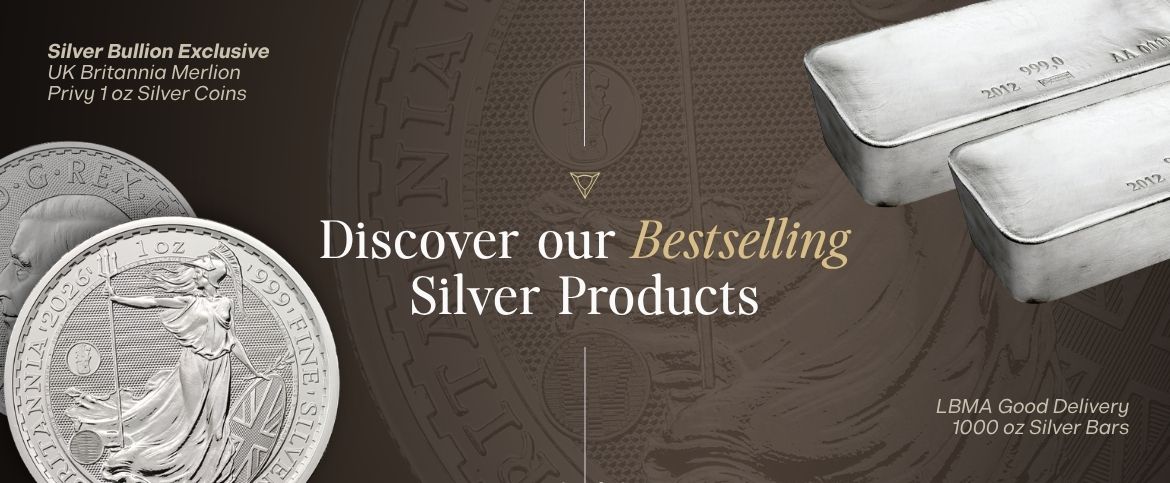
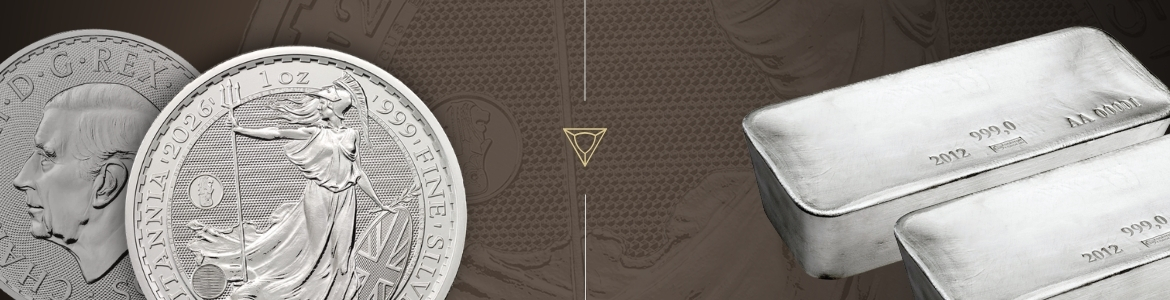
| Explore two distinctive ways to own physical silver, from the 2026 1 oz Britannia Merlion Privy Coin, available exclusively through Silver Bullion, to a 1,000 oz Good Delivery bar. | ||
|
||
|


